
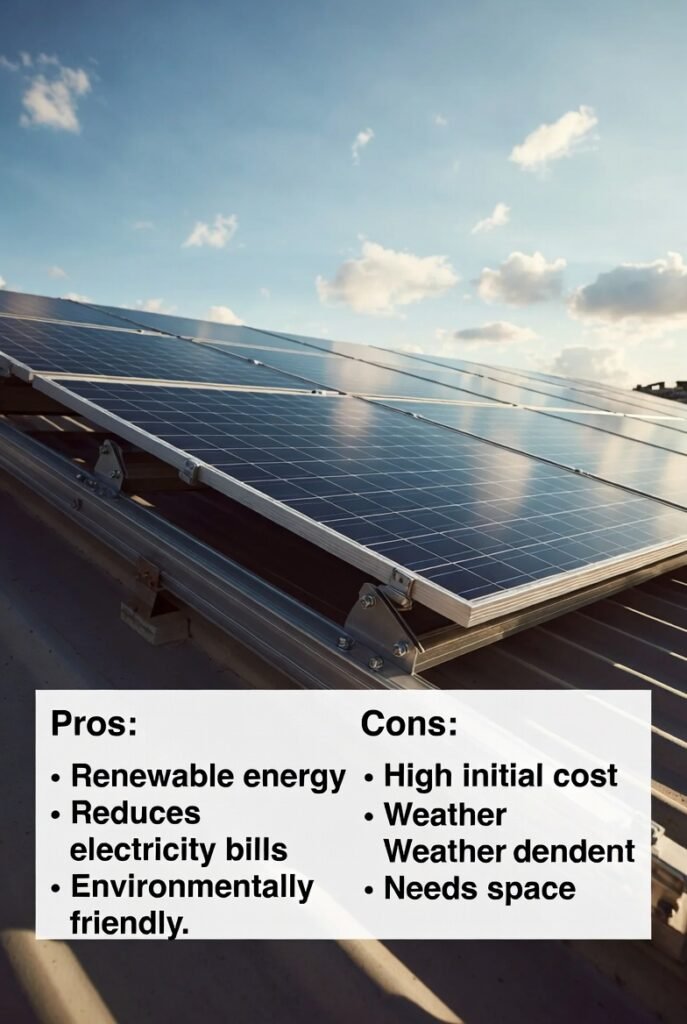
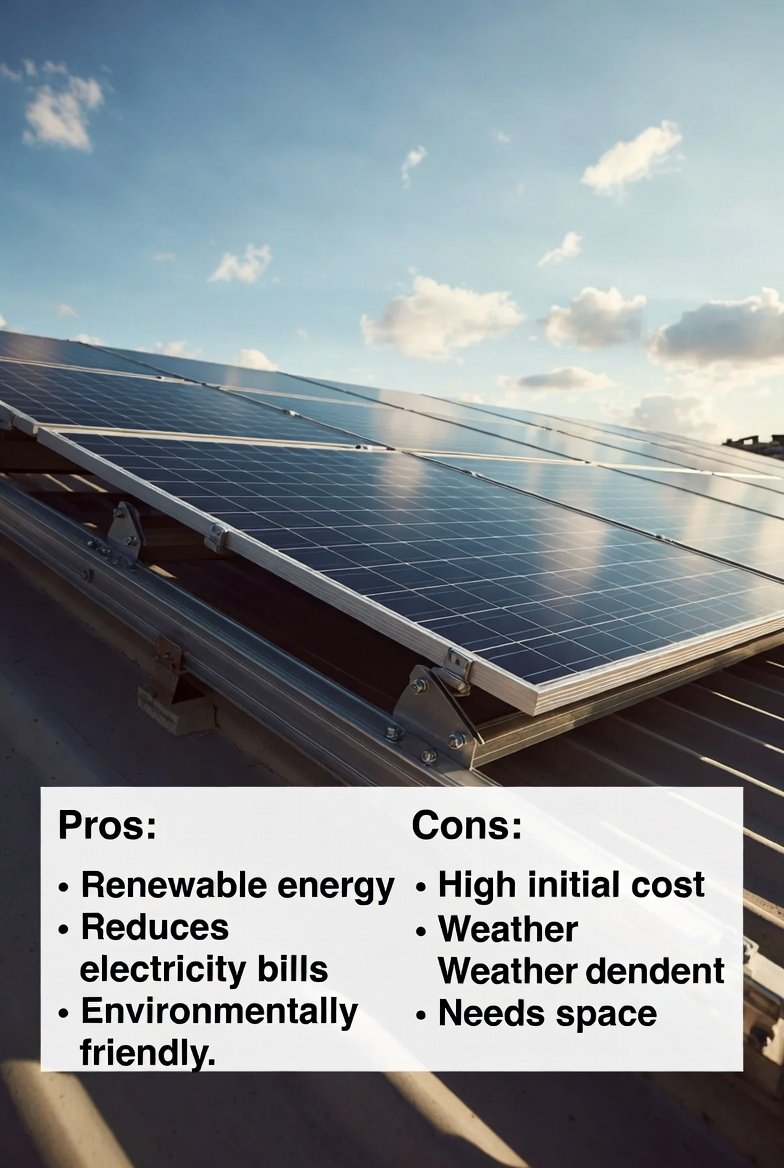
Solar Pros and Cons
Solar energy is often presented as an obvious upgrade — cleaner power, lower bills, long-term savings.
But serious homeowners don’t make infrastructure decisions based on optimism.
They ask a more grounded question:
👉 What are the real advantages — and what are the tradeoffs?
Because solar is not a gadget.
It is a 25–30 year structural investment attached to your property.
And investments deserve balanced evaluation.
This guide walks through the upside, the friction points, and the situational variables that determine whether solar becomes a smart financial move… or simply an expensive experiment.
No hype. No persuasion. Just clarity.
Executive Snapshot (For Fast Decision-Makers)
Most homeowners choose solar for three core reasons:
✔ long-term electricity savings
✔ protection from rising utility rates
✔ increased control over energy production
Most hesitation comes from:
⚠ upfront cost
⚠ installation complexity
⚠ long payback horizons
⚠ roof constraints
Neither side is universally correct.
Solar performs exceptionally well in some scenarios — and less impressively in others.
Understanding where you fall is what matters.
First, a Reality Check Many Buyers Need
Solar is rarely a “quick win.”
It behaves more like:
👉 a financial hedge
👉 a property upgrade
👉 a long-duration asset
Homeowners expecting instant savings often misunderstand the timeline.
Those approaching it strategically tend to be far more satisfied.
The Pros of Solar Panels
Let’s start with what actually drives adoption.
Not marketing claims — but structural benefits.
✔ Lower Long-Term Electricity Costs
Once a system begins generating power, purchased electricity often declines — sometimes materially depending on system size and local rates.
Many residential systems reach financial breakeven within roughly:
👉 6–12 years
After that, reduced utility dependence can extend for decades.
For deeper modeling:
Savings are never identical across homes — but the directional logic is clear.
✔ Protection Against Utility Rate Inflation
Electricity pricing historically trends upward in many regions.
Solar introduces a level of predictability into a cost category that is otherwise volatile.
Think of it less as “free power”…
…and more as rate stabilization.
Predictability itself has economic value.
✔ Potential Increase in Property Appeal
Many buyers perceive owned solar systems as a modernization signal — particularly in markets where energy costs are prominent.
However:
Solar should complement resale value — not be relied upon to define it.
Housing markets ultimately set the premium.
✔ Environmental Impact (With Practical Benefits)
Reducing reliance on fossil-fuel-generated electricity can lower household emissions.
For some homeowners, that matters deeply.
For others, the environmental benefit is secondary to economics.
Both perspectives are valid.
✔ Energy Independence (Partial, Not Absolute)
Solar reduces reliance on centralized power — but most homes remain grid-connected unless paired with storage.
Which leads to a common misunderstanding:
Panels alone do NOT guarantee outage protection.
Battery strategy matters.
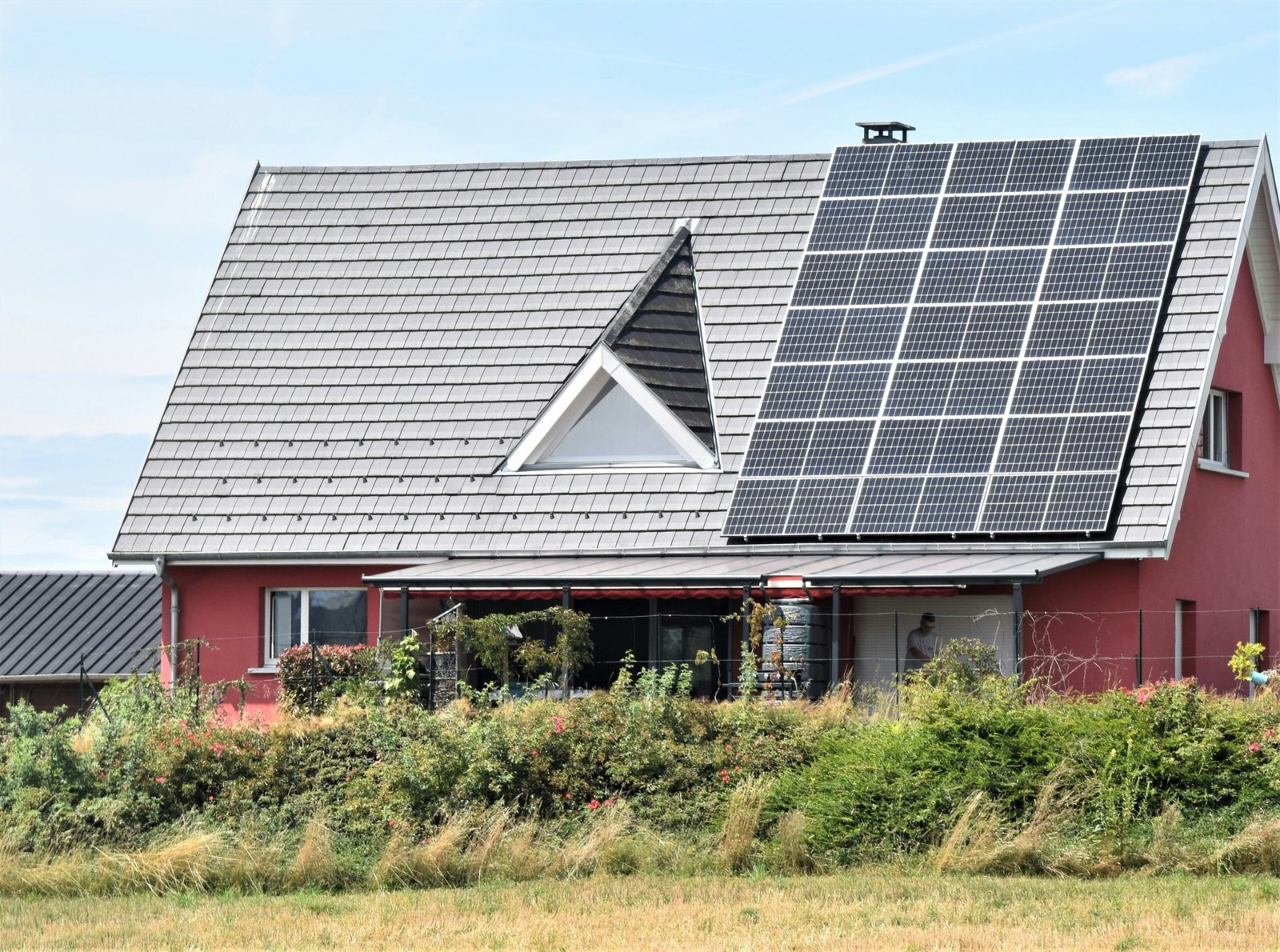
✔ Incentives Can Improve Financial Outcomes
Tax credits and regional programs often reduce upfront cost.
Explore current structures:
Policy support frequently reshapes ROI timelines.
Now — The Tradeoffs Most Installers Don’t Emphasize Enough
Balanced decisions require acknowledging friction.
Solar is powerful.
But not effortless.
⚠ Upfront Investment Is Real
Residential systems commonly land in the five-figure range before incentives.
Pricing varies widely — but clarity starts here:
Financing can soften entry, yet borrowing introduces interest that influences long-term returns.
⚠ Payback Requires Patience
Solar rewards time.
Homeowners planning short tenures may never fully capture the economic arc.
Infrastructure favors stability.
If relocation is likely within a few years, the financial equation becomes less predictable.
⚠ Installation Is a Process — Not a Single Event
Permits, inspections, and utility approvals shape the timeline.
Projects often span several months.
Understanding this early prevents unnecessary anxiety:
Regulatory pacing is normal.
Not a red flag.
⚠ Roof Suitability Matters More Than People Expect
Solar performs best when structural conditions cooperate.
Challenges can include:
- aging roofing materials
- heavy shading
- complex geometry
- limited south/west exposure
Sometimes adjustments are minor.
Occasionally they reshape feasibility entirely.
Professional evaluation matters.
⚠ Savings Are Influenced by Geography
Electricity prices vary dramatically across the U.S.
Higher-rate regions often see stronger solar economics.
Lower-rate regions may experience slower financial acceleration.
Location is not a detail — it is a primary variable.
⚠ Insurance and Risk Considerations
Solar adds asset value — and therefore exposure.
Most policies can extend coverage, but verification is wise:
Protection should evolve alongside investment.
⚠ Technology Improves — But Timing Still Matters
Some buyers hesitate, waiting for “better panels.”
Yet efficiency gains tend to be incremental rather than revolutionary.
Delaying purely for future tech can mean paying higher utility costs in the meantime.
Opportunity cost is often overlooked.
A Decision Filter Smart Homeowners Use
Instead of asking:
👉 “Is solar good or bad?”
Ask:
👉 “Is solar logical for my property and timeline?”
Solar often performs best when:
✔ you expect long-term homeownership
✔ electricity costs are meaningful
✔ your roof is suitable
✔ incentives are available
✔ financing is disciplined
When several of these align, adoption tends to feel less speculative.
More strategic.
Executive Insight Most Buyers Realize Later
Solar is rarely about maximizing profit.
It is about reducing uncertainty.
Locking in energy economics can be psychologically — and financially — stabilizing.
Certainty carries its own return.
What Solar Is — And What It Isn’t
Solar IS:
- a capital improvement
- a long-term hedge
- an infrastructure upgrade
Solar is NOT:
- instant savings
- risk-free
- universally optimal
Balanced expectations produce the strongest ownership experiences.
The Quiet Advantage Few People Talk About
Once installed, solar becomes largely invisible.
No fuel deliveries.
No recurring shopping.
No price negotiations.
Just generation.
Sometimes convenience is the most underrated benefit.
Where Smart Buyers Go Next
Build your decision stack methodically:
👉 Solar Panel Return on Investment
👉 Solar Panel System Cost
👉 Solar Loan Rates
👉 Solar Incentives by State
Clarity compounds — especially with long-duration assets.
FAQs
Is solar worth it financially?
It often can be when energy savings meaningfully exceed system costs over time, though outcomes vary by location and usage.
What is the biggest downside to solar?
Upfront investment and long payback horizons are the most common considerations.
Do solar panels eliminate electric bills?
Some homes significantly reduce grid purchases, but full elimination is not typical without storage and favorable policy structures.
How long do solar panels last?
Many systems are engineered for multi-decade performance, often with warranties spanning 20–25 years.
Is solar a good investment if I might move?
Short tenures can complicate ROI, so relocation timing should factor into the decision.