
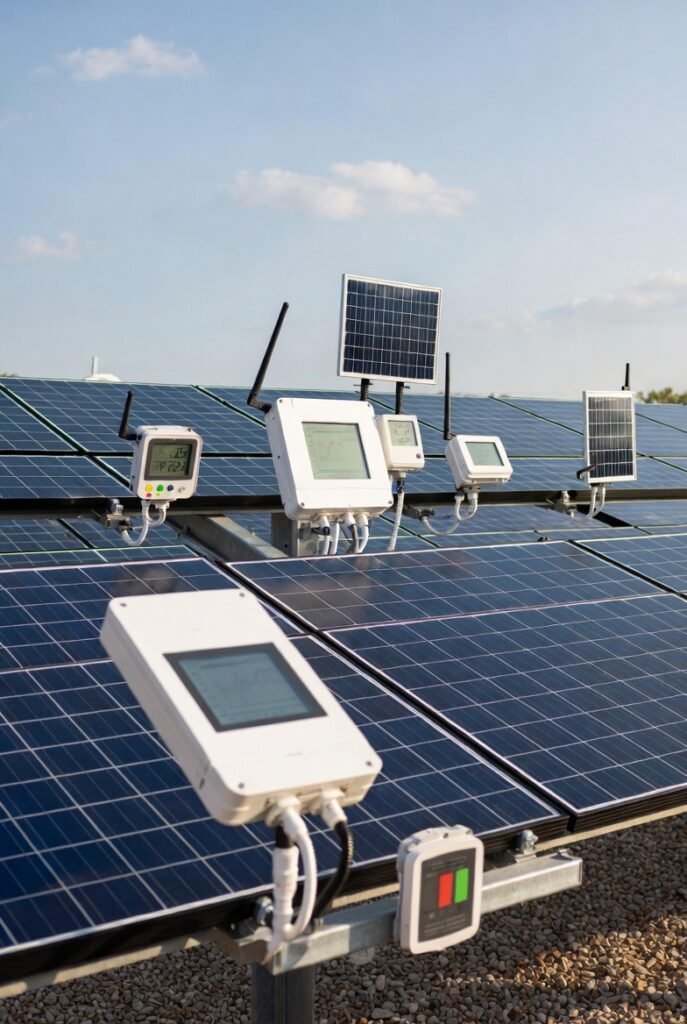
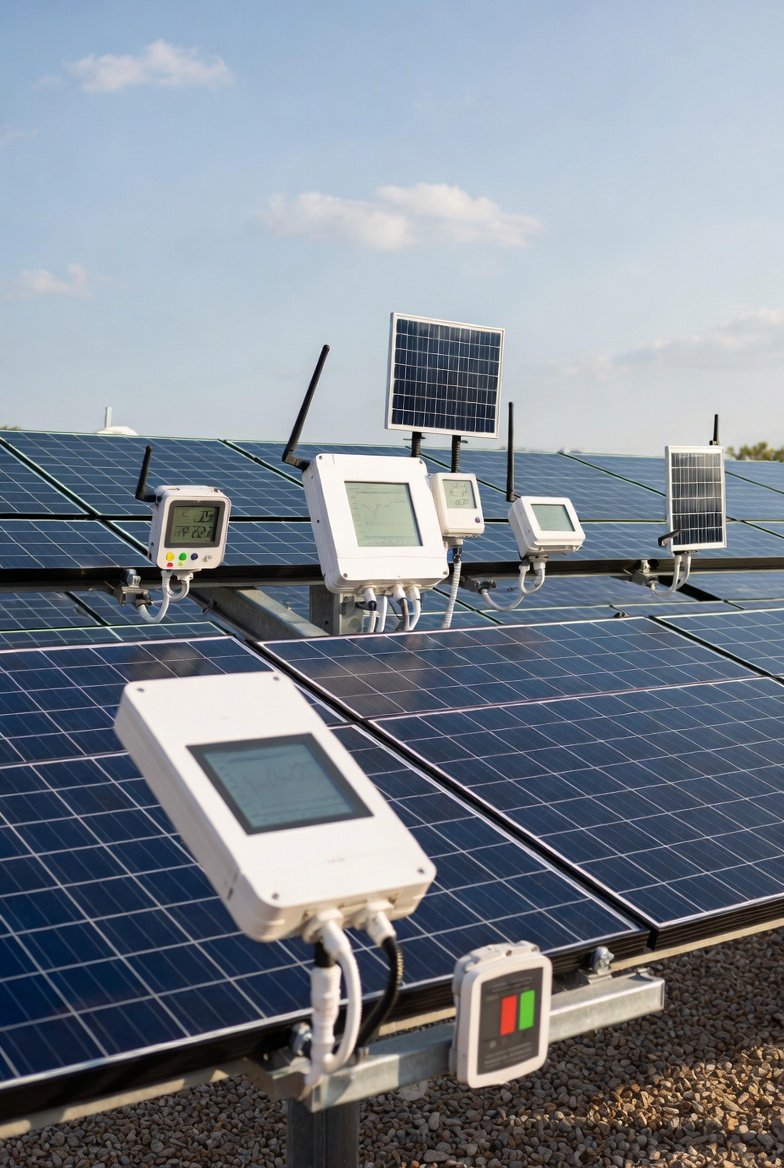
Solar Monitoring Systems
Solar panels generate electricity silently.
No moving parts.
No audible signal.
No daily reminder that thousands of watts are flowing across your roof.
Which creates an unusual ownership dynamic:
👉 A critical infrastructure asset… operating largely out of sight.
That is why solar monitoring is not a convenience feature.
It is operational visibility.
And visibility is what separates confident solar owners from uncertain ones.
This guide explains how monitoring works, what it realistically protects, and why performance transparency quietly supports the financial success of a multi-decade energy investment.
No hype. No software pushing. Just infrastructure-level clarity.
Executive Reality Check
Most residential systems now include monitoring capability — yet many homeowners underestimate its importance until they need it.
Because the greatest risk in solar is rarely catastrophic failure.
It is undetected underperformance.
A system producing 10–15% below expectation for months can materially affect long-term savings.
Monitoring exists to close that awareness gap.
How Solar Monitoring Systems Actually Work
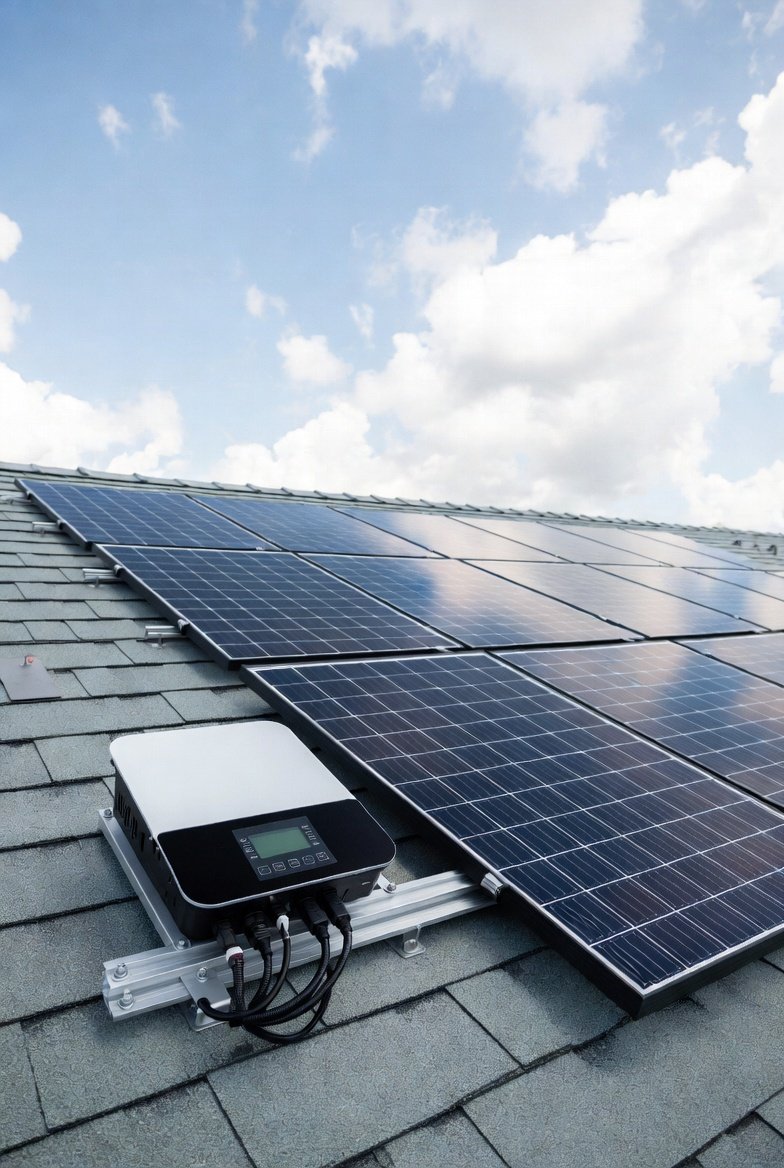
At a structural level, monitoring platforms translate electrical production into readable performance data.
Typical architecture:
Solar panels → inverter → monitoring interface → homeowner dashboard
The inverter acts as the system’s communication bridge — which is why inverter selection often influences monitoring depth.
Good hardware enables better visibility.
What Monitoring Lets You Verify
Most platforms provide insight into:
- real-time or near real-time production
- daily and lifetime generation
- historical trends
- system status indicators
- in some configurations, household consumption
Higher-resolution systems may isolate performance at the panel level.
But the core purpose remains constant:
👉 confirm the system is behaving as engineered.
Engineering Perspective
From an infrastructure standpoint, monitoring does not increase production.
It improves response time when production deviates.
Across long-duration assets, faster response often protects financial outcomes more effectively than reactive troubleshooting months later.
Operational awareness is a form of risk control.
System-Level vs Panel-Level Monitoring
Not all visibility operates at the same resolution.
Monitoring Type | What It Shows | Where It Excels |
System-Level | Total production | Simpler layouts, consistent sunlight |
Panel-Level | Individual module output | Complex roofs, partial shading |
Neither approach is inherently superior.
The correct choice reflects roof geometry and performance priorities — not marketing positioning.
A Data Anchor Worth Understanding
Field observations across residential fleets consistently show that unnoticed issues — such as inverter faults or wiring irregularities — can suppress production for extended periods before homeowners detect them through billing patterns.
Even modest output declines, if prolonged, can influence projected payback timelines.
For deeper financial context:
Monitoring protects the assumptions behind those projections.
Early Detection — Monitoring’s Quiet Advantage
Most solar issues begin subtly rather than dramatically.
Examples can include:
- inverter communication faults
- shading changes from vegetation growth
- tripped breakers
- connectivity interruptions
These are rarely catastrophic — but they are economically relevant if left unresolved.
Visibility encourages earlier investigation.
Earlier investigation typically reduces lost generation.
Solar Monitoring Apps — Infrastructure in Your Pocket
Many homeowners engage with their system through mobile or browser-based dashboards.
Common capabilities include:
✔ quick production checks
✔ trend visualization
✔ alert notifications
✔ generation history
Some platforms convert output into environmental equivalents — useful context, though primarily illustrative.
The real value lies in performance confirmation.
When Monitoring Becomes Especially Valuable
Monitoring matters most when reliance on system output is high.
Conditions often include:
✔ tightly modeled ROI expectations
✔ battery integration
✔ complex roof geometry
✔ elevated electricity pricing
✔ larger system size
As infrastructure importance rises, so does the value of observability.
If storage is part of your long-term strategy:
Energy flows become more dynamic — and visibility correspondingly more useful.
What Monitoring Cannot Do
Balanced expectations protect decision quality.
Monitoring will not:
❌ prevent outages
❌ repair equipment
❌ guarantee savings
❌ replace professional inspections
It is an intelligence layer — not an engineering substitute.
System design still governs reliability.
Understanding the broader deployment path helps anchor this reality:
Cost Perspective — Why Monitoring Is Usually High-Value
Basic monitoring is frequently bundled into residential installations.
More advanced analytics may introduce incremental expense — but typically represent a small portion of total system cost.
Relative to the investment solar represents, visibility often delivers disproportionate reassurance.
Documentation Benefits Few Buyers Anticipate
Production records can sometimes support post-event assessments — particularly after weather-related incidents.
While policy language always governs outcomes, documentation strengthens clarity during insurance conversations.
Structured records rarely hurt.
Decision Filter — When Monitoring Should Be Non-Negotiable
Monitoring tends to feel essential when:
✔ solar represents a major financial decision
✔ performance expectations are high
✔ outage resilience matters
✔ system complexity increases
Conversely, in very small or straightforward systems, basic visibility may suffice.
Context guides necessity.
Executive Insight Most Owners Realize Later
Solar is often described as “install and enjoy.”
In reality, the strongest ownership experiences come from understanding — not ignoring — system behavior.
Monitoring transforms solar from a passive upgrade…
into a transparent infrastructure asset.
And transparency builds long-term confidence.
What This Page Is — And What It Isn’t
This page IS:
- a system visibility framework
- a performance awareness guide
- an infrastructure intelligence overview
This page is NOT:
- software endorsement
- technical diagnostics
- engineering instruction
Equipment design ultimately defines monitoring capability.
Where Smart Buyers Go Next
Strengthen your system literacy:
👉 Solar Inverter Types
👉 Solar Panel System Cost
👉 Solar Panel Return on Investment
Confidence compounds when infrastructure is observable.
FAQs
Do all solar systems include monitoring?
Many modern installations provide monitoring, though depth varies by equipment and design.
Can monitoring detect performance problems?
Monitoring often highlights production anomalies, enabling earlier investigation.
Is panel-level monitoring necessary?
Not always — but it can provide additional clarity for complex roof layouts.
Can I check my solar production on my phone?
Most platforms offer mobile interfaces for convenient performance visibility.
Does monitoring improve ROI?
Indirectly — by helping ensure the system continues operating as expected.