
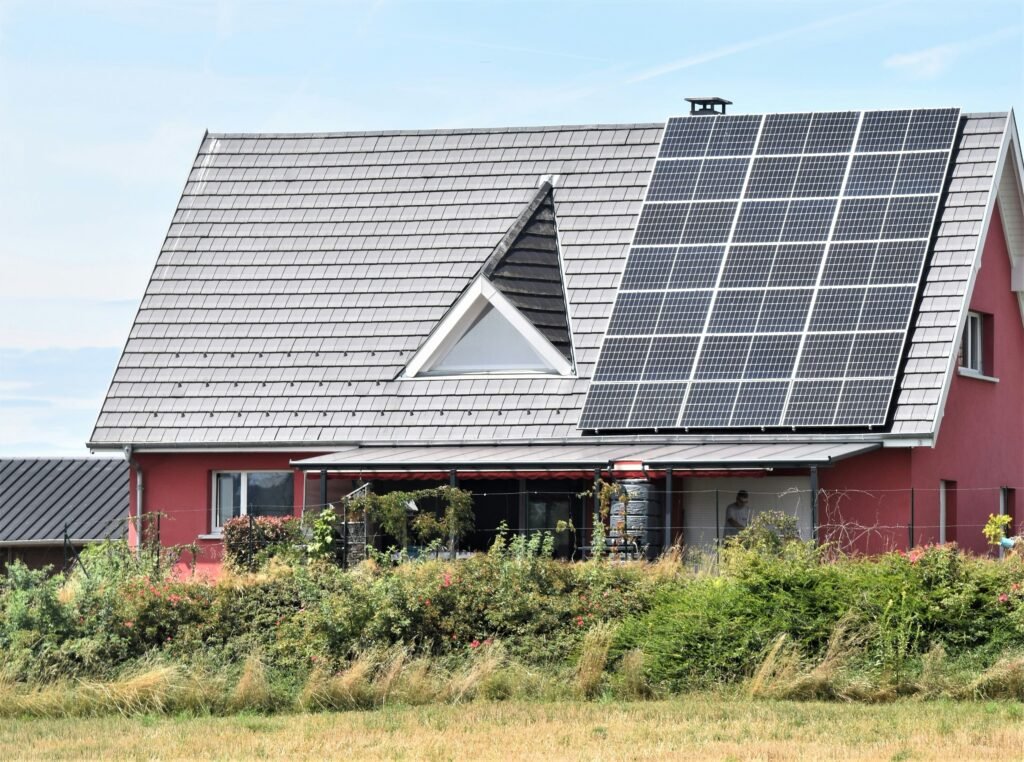
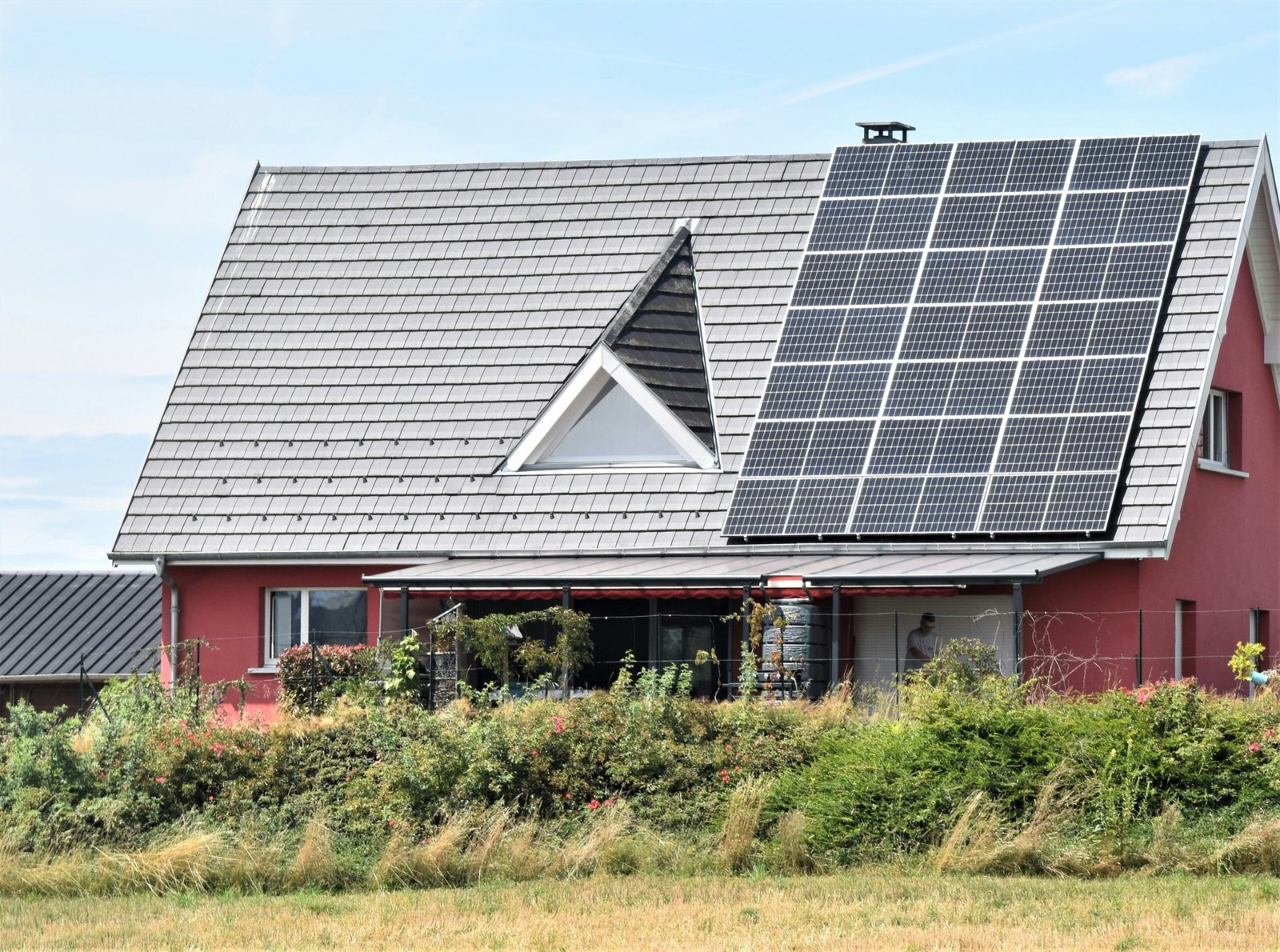
Solar System Design for Home — Principles That Determine Real Performance
Most homeowners researching solar believe system performance depends mainly on how many panels are installed.
In reality, the design of the system often matters just as much.
Two solar systems with identical panel counts can produce very different electricity output depending on:
- roof orientation
- shading conditions
- layout planning
- inverter configuration
- electrical design
- sunlight exposure
A well-designed solar installation maximizes electricity production while working within the home’s physical and electrical constraints.
Solar system design therefore answers a set of practical questions:
- Where should panels be placed on the roof?
- How should panels be arranged for best performance?
- How does shading affect layout decisions?
- What inverter architecture should be used?
- How does the system connect to the home’s electrical system?
Understanding these design principles helps homeowners evaluate installation proposals and ensure the solar system installed will perform efficiently for decades.
What Solar System Design Actually Means
Solar system design is the process of creating a complete layout and electrical plan for a photovoltaic (PV) installation.
A typical residential solar design includes:
Design Component | Purpose |
Energy demand analysis | Determines system size |
Roof evaluation | Determines panel placement |
Shading analysis | Prevents energy loss |
Panel layout planning | Optimizes energy production |
Inverter architecture | Converts solar electricity |
Electrical system integration | Connects solar to the home |
The final design is essentially a blueprint for the installation.
Professional solar designers must balance three key variables:
- Energy demand of the home
- Physical conditions of the property
- Electrical system configuration
Step 1 — Evaluate Household Energy Demand
Solar systems should first be designed around the home’s electricity usage.
Homeowners typically review 12 months of electricity bills to determine average consumption.
Example electricity usage:
Monthly Electricity Use | Daily Average |
600 kWh | 20 kWh/day |
900 kWh | 30 kWh/day |
1200 kWh | 40 kWh/day |
This value determines the solar system size required to offset energy demand.
The calculations used to determine solar capacity are explained here:
solar-system-sizing-calculator
Step 2 — Site Assessment and Roof Evaluation
After analyzing energy consumption, the next step is assessing whether the property is suitable for solar.
Installers evaluate:
- roof size
- roof pitch
- roof orientation
- structural condition
- shading sources
These factors determine where panels can be installed.
Typical roof space requirements:
System Size | Panels | Roof Area Needed |
6 kW | ~15 panels | ~330 sq ft |
8 kW | ~20 panels | ~440 sq ft |
10 kW | ~25 panels | ~550 sq ft |
However, usable roof area is usually smaller than total roof area because of:
- chimneys
- skylights
- vents
- roof edges
These obstacles affect panel layout decisions.
Understanding Solar Irradiance and Sunlight Exposure
Solar irradiance refers to the amount of solar energy that reaches a specific location.
Different regions receive different levels of sunlight.
Example average solar production:
Region | Annual Solar Production per kW |
Northern states | ~1200 kWh |
Central regions | ~1400 kWh |
Southwest | 1600–1800 kWh |
Higher solar irradiance means the same solar system will produce more electricity.
Sunlight exposure is therefore one of the most important variables in solar design.
Step 3 — Panel Orientation and Tilt
Solar panels generate the most electricity when facing toward the sun for the longest possible period.
In the northern hemisphere:
South-facing panels provide the highest production.
However, east- and west-facing roofs can still produce strong results.
Typical production comparison:
Orientation | Relative Energy Production |
South | 100% |
Southwest / Southeast | 90–95% |
East / West | 80–90% |
North | <60% |
Tilt angle also influences solar output.
Optimal tilt generally ranges between 20° and 40°, depending on geographic latitude.
Step 4 — Shading Analysis
Shading is one of the most critical aspects of solar design.
Even small shadows can reduce solar system performance.
Common shading sources include:
- trees
- chimneys
- neighboring buildings
- roof vents
- satellite dishes
In traditional string inverter systems, panels are connected in groups.
If one panel becomes shaded, it can reduce output for the entire string.
This phenomenon is called string loss.
Solar designers therefore perform shading analysis using:
- sun path modeling
- aerial imagery
- site measurements
Avoiding shaded areas is essential for maintaining system performance.
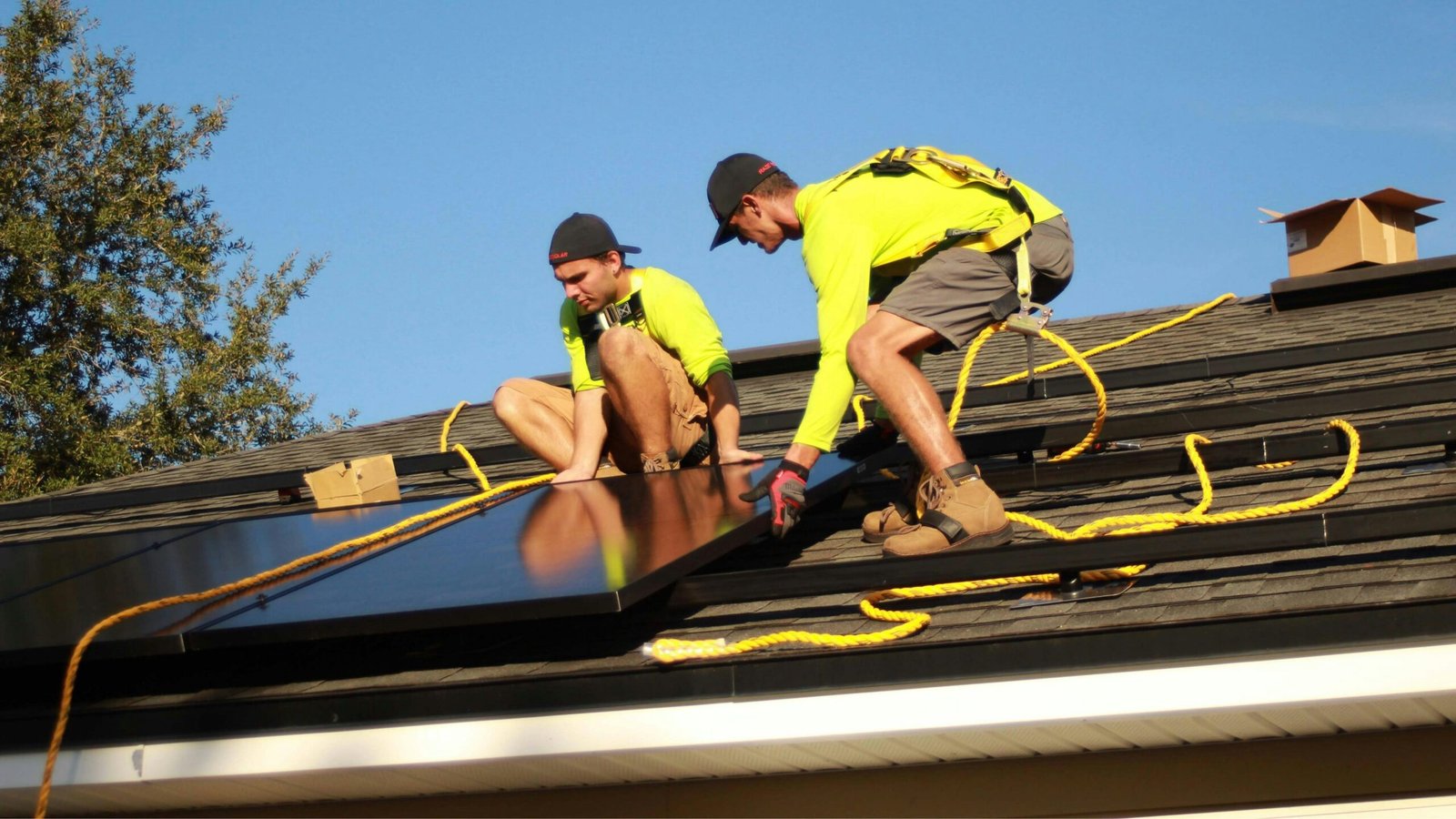
Partial Shading and Panel Mismatch
When a shaded panel produces less electricity than others in the string, a mismatch occurs.
This mismatch can cause the inverter to reduce the output of the entire group of panels.
Solutions include:
- microinverters
- power optimizers
- panel layout adjustments
These technologies allow each panel to operate independently, reducing shading losses.
Step 5 — Solar Panel Layout Strategy
Solar panels must be arranged in a layout that balances performance and safety.
Important layout considerations include:
Layout Factor | Purpose |
Uniform orientation | Maximizes inverter efficiency |
Row spacing | Prevents panels shading each other |
Maintenance pathways | Allows safe roof access |
Roof edge setbacks | Protects roof structure |
Panels are typically arranged in rectangular groups to simplify wiring and mounting.
Designers may also divide arrays across multiple roof sections when necessary.
Roof Safety Zones and Panel Spacing
Solar installations require clear space near roof edges and ridges.
These areas are called setback zones.
They serve several purposes:
- allow firefighter access
- reduce wind loading risk
- provide maintenance pathways
Typical rooftop solar layouts maintain spacing around:
- roof edges
- roof ridges
- obstacles like vents or chimneys
These safety zones slightly reduce the total number of panels that can fit on a roof.
Step 6 — Inverter and System Architecture
Solar panels produce direct current (DC) electricity.
Homes use alternating current (AC) electricity.
An inverter converts DC power into usable AC electricity.
Common inverter configurations include:
String Inverters
Panels are connected in strings.
Advantages:
- lower cost
- simple design
Disadvantages:
- shading affects entire string
Microinverters
Each panel has its own inverter.
Advantages:
- better performance with shading
- panel-level monitoring
Disadvantages:
- higher system cost
The choice depends on roof complexity and shading conditions.
Electrical System Design
Solar systems must connect safely to the home’s electrical system.
Important design considerations include:
- electrical panel capacity
- inverter placement
- AC disconnect location
- wiring pathways
These components ensure solar electricity can safely integrate with the household electrical system.
The installation process is explained in detail here:
Solar Design Tools Used by Installers
Professional solar designers use specialized software to model system performance.
Common solar design tools include:
Tool | Purpose |
PVWatts | Solar production estimation |
Aurora Solar | Layout and shading modeling |
Helioscope | Solar system simulation |
Shade analysis tools | Measure shading patterns |
These tools help estimate electricity generation and verify system performance before installation.
Real Example — Designing a Residential Solar System
Consider a typical suburban home.
Electricity usage:
900 kWh per month
Daily usage:
30 kWh
Location sunlight:
5 peak sun hours
Estimated solar system size:
7 kW
Panel configuration:
System Size | Panels | Roof Area |
7 kW | 18 panels | ~400 sq ft |
Roof layout:
- 12 panels on south roof
- 6 panels on west roof
Inverter configuration:
- two panel strings connected to a single inverter
Expected annual production:
~10,800 kWh
This system would offset most of the home’s electricity usage.
Common Solar System Design Mistakes
Several design mistakes frequently reduce solar system performance.
Typical errors include:
- placing panels on shaded roof sections
• splitting panels across multiple orientations unnecessarily
• ignoring inverter capacity limits
• overestimating usable roof space
• failing to consider future electricity demand
Avoiding these mistakes helps ensure the system produces the expected electricity output.
Solar System Design Checklist
Before approving a solar installation, homeowners should confirm these design elements.
Design Element | What to Verify |
System size | Matches electricity consumption |
Roof orientation | Panels placed on best roof surfaces |
Shading | Minimal obstruction |
Layout spacing | Safe installation and maintenance |
Inverter type | Suitable for roof layout |
Future expansion | Room for additional panels |
Key Takeaways — Solar System Design for Homes
Solar system design determines how efficiently a solar installation will perform.
A well-designed system should:
- match household electricity demand
- maximize sunlight exposure
- minimize shading losses
- optimize panel layout
- use appropriate inverter technology
For most homes:
- solar system size: 6–8 kW
- panel count: 15–20 panels
- roof space required: 350–450 sq ft
Understanding solar design principles helps homeowners evaluate proposals and choose systems that will perform efficiently over the lifetime of the installation.
For homeowners comparing system costs and long-term savings, see:
For understanding system economics, see:
solar-panel-return-on-investment
Frequently Asked Questions
What is solar system design for a home
Solar system design involves planning the layout, orientation, electrical configuration, and equipment selection for a residential solar installation.
What factors affect solar panel layout
Panel layout depends on roof orientation, shading, roof size, inverter configuration, and system capacity.
How much roof space is required for solar panels
Most residential solar systems require 300–500 square feet of roof space depending on system size.
Can solar panels work on east or west facing roofs
Yes. East and west facing systems typically produce 80–90% of the output of south facing systems.
What inverter is best for home solar
Microinverters perform better when roofs have shading or multiple orientations, while string inverters are usually cheaper.
Do solar batteries change solar system design
Batteries add storage capacity but do not increase solar generation.
How long does a solar system last
Most residential solar systems operate for 25–30 years with minimal maintenance.
How do installers design solar systems
Installers evaluate energy demand, roof conditions, shading, and system architecture using solar design software and engineering guidelines.