
Solar Panels on Flat Roof — The Engineering Constraints Behind the Layout
Solar panels generate electricity whenever sunlight reaches photovoltaic cells.
What determines how efficiently that happens is not just sunlight itself, but panel orientation, tilt angle, and spacing.
On sloped roofs these variables are largely determined by the roof geometry.
Flat roofs operate differently.
Because the surface provides no slope, solar systems must create their own geometry using rack systems that tilt panels toward the sun. The installation becomes a layout engineering problem balancing several competing constraints:
- tilt angle and sunlight exposure
• row spacing and shading prevention
• ballast weight and structural limits
• wind uplift forces
• roof drainage pathways
When these factors are designed correctly, solar panels on flat roofs can perform just as efficiently as systems installed on pitched residential roofs.
Research from the National Renewable Energy Laboratory (NREL) shows that flat-roof solar systems can achieve comparable energy production to sloped-roof installations when tilt angles and spacing are properly engineered.
Can Solar Panels Be Installed on a Flat Roof
Yes. Solar panels are commonly installed on flat roofs on both residential and commercial buildings.
Flat roofs provide a key advantage: orientation flexibility.
Instead of being limited by roof direction, designers can orient the solar array toward the most productive direction for sunlight.
However, specialized mounting systems are required.
Key design factors include:
Design Factor | Purpose |
Panel tilt | controls solar exposure |
Row spacing | prevents shading |
Mounting system | stabilizes the array |
Roof structure | determines load capacity |
Drainage clearance | prevents water pooling |
Proper engineering ensures the system operates safely and efficiently.
How Solar Mounting Systems Work on Flat Roofs
Solar panels cannot simply be placed directly on a flat roof.
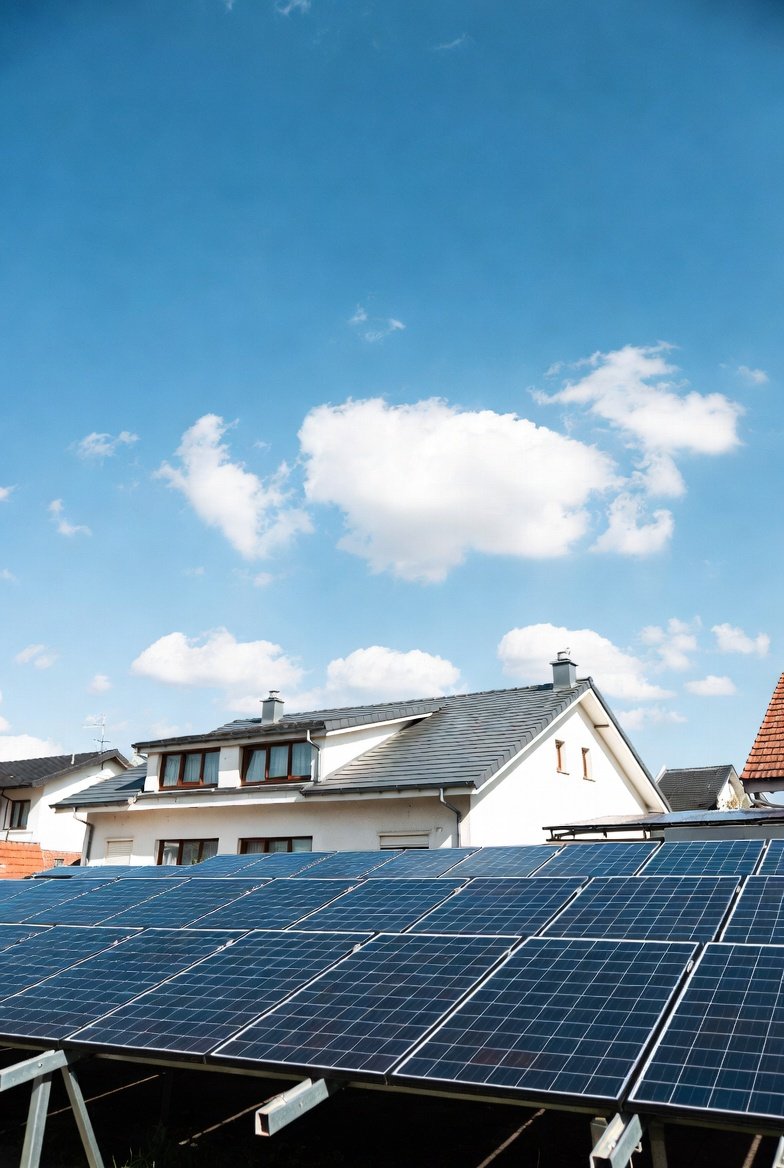
Instead, installers mount panels on tilted racking systems that elevate them above the roof surface.
These racks allow designers to control:
- tilt angle
• orientation
• row spacing
Two mounting strategies are commonly used.
Ballasted Mounting Systems
Ballasted systems hold the solar array in place using weighted blocks, usually concrete ballast.
The racking structure sits on the roof while ballast provides stability.
Advantages include:
- no roof penetrations
• reduced waterproofing risk
• faster installation
Ballasted systems typically add:
3–8 pounds per square foot
Structural evaluation is required before installation.
Ballasted mounts are widely used on commercial buildings and many residential flat roofs.
Penetrating Mount Systems
Penetrating mounts attach directly to the building structure using bolts and flashing.
Advantages:
- lighter system weight
• stronger attachment in high-wind zones
Disadvantages:
- roof penetrations require waterproof sealing
• installation complexity increases
Penetrating systems are used when roof structures cannot safely support ballast loads.
Roof Structural Load Capacity
Before installing solar on a flat roof, engineers must verify that the roof structure can support the additional weight.
Typical commercial flat roofs are designed for:
20–30 pounds per square foot (psf) live load capacity
Ballasted solar systems add roughly:
3–8 psf
Structural engineers evaluate:
- roof deck strength
• building framing
• ballast distribution
If the roof cannot support the additional load, installers may use penetrating mounts or lighter aerodynamic racking systems.
This structural evaluation is a standard step in professional solar design.
Aerodynamic Mounting Systems
Modern flat-roof solar systems often use aerodynamic racking designs.
These systems incorporate wind deflectors and low-profile mounting geometry that reduce uplift forces.
Benefits include:
- lower ballast requirements
• improved wind resistance
• reduced structural load
Aerodynamic racks are increasingly common in newer flat-roof installations.
Why Flat Roof Solar Systems Use Lower Tilt Angles
Ideal solar tilt typically matches geographic latitude.
However, flat-roof systems rarely use those angles.
Most installations use tilt angles between:
5° and 15°
Lower tilt angles reduce several engineering constraints.
Row spacing
Higher tilt creates longer shadows and requires wider spacing between panel rows.
Wind loads
Steeper panels catch more wind.
Ballast weight
Steeper tilt requires heavier ballast to maintain stability.
Lower tilt allows more panels to fit on the roof.
East-West Mounting Systems
Some flat-roof solar arrays use east-west orientation rather than traditional south-facing tilt.
Panels are mounted back-to-back at low tilt angles.
Advantages include:
- higher panel density
• reduced wind loads
• lower ballast requirements
East-west systems produce a more balanced electricity output across the day.
This configuration is common on large commercial buildings.
Row Spacing and Shadow Prevention
Solar arrays require spacing between rows to prevent shading.
When the sun sits lower in the sky during winter months, the front row of panels can cast shadows on rows behind them.
Spacing depends on:
- panel height
• tilt angle
• winter sun angle
Typical spacing ranges between:
3–6 feet
Lower tilt allows panels to be placed closer together, improving system density.
Wind Load and Roof Edge Effects
Panels mounted on racks can behave like aerodynamic surfaces during strong winds.
Engineers evaluate:
- local wind speeds
• building height
• roof exposure
• roof edge zones
Edges and corners typically experience stronger wind forces.
Installers often increase ballast weight in these areas.
Roof Drainage and Water Flow
Flat roofs are designed with slight slopes to allow rainwater to flow toward drains.
Solar arrays must maintain these drainage pathways.
Panels should not block:
- roof drains
• drainage channels
• maintenance pathways
Poor layout can cause water pooling, which may damage roof membranes.
Planning Around Roof Equipment
Flat roofs often contain equipment such as:
- HVAC units
• vents
• skylights
• communication equipment
These obstacles reduce usable roof area and may create shading.
Solar designers must position arrays carefully to maintain clearances and avoid shadows.
Bifacial Solar Panels on Flat Roofs
Flat roofs are often ideal for bifacial solar panels.
Bifacial panels generate electricity from both the front and rear surfaces.
If the roof surface is reflective — for example white membrane roofing — sunlight reflected upward can increase panel output.
Typical gains range from:
5–10% additional energy production
Because flat roofs often use reflective materials, bifacial panels can perform especially well in these installations.
Snow Considerations
In colder climates snow accumulation must be considered in flat-roof solar design.
Low tilt panels may retain snow longer than steeply tilted panels.
Factors that influence snow shedding include:
- tilt angle
• panel surface coating
• local snowfall patterns
While snow can temporarily reduce production, solar panels often warm slightly during sunlight exposure, helping snow slide off the surface.
System designers account for snow loads during structural evaluation.
Roof Lifespan and Solar Installation Timing
Solar systems typically operate for 25–30 years.
If the roof membrane is near the end of its lifespan, installing solar may require removing the system later for roof replacement.
Solar installation is ideal when:
- the roof is new
• the roof has recently been replaced
• the roof has at least 15 years of remaining life
Maintenance Advantages of Flat Roof Solar
Flat roof systems offer practical maintenance advantages.
Because panels are elevated and accessible, technicians can more easily perform:
- panel cleaning
• electrical inspection
• inverter servicing
Maintenance access is generally easier compared to steep residential roofs.
Real Example — Flat Roof Solar Layout
Example home:
Roof area: 1,200 sq ft
Monthly electricity usage:
900 kWh
Recommended solar system:
7 kW
Panel layout:
System Size | Panels | Tilt | Row Spacing |
7 kW | 18 panels | 10° | 4 ft |
Mounting system:
ballasted racking
Layout strategy:
- three rows of six panels
• spacing prevents winter shading
• drainage pathways remain clear
Roof coverage:
~420 sq ft
Flat Roof Solar Cost Considerations
Flat-roof installations may cost slightly more because they require:
- specialized mounting systems
• structural evaluation
• engineering design
However, system size remains the primary cost factor.
More details:
Designing a Flat Roof Solar System
Solar design involves several steps.
Step | Purpose |
Energy analysis | determine system size |
Roof inspection | evaluate structure |
Tilt selection | balance production vs spacing |
Layout design | prevent shading |
Mount engineering | ensure stability |
More design guidance:
System sizing calculations:
solar-system-sizing-calculator
Solar output modeling:
Key Takeaways
Solar panels can work extremely well on flat roofs when the system is properly designed.
Successful installations balance:
- tilt angle
- row spacing
- wind resistance
- ballast weight
- drainage pathways
Solar financial performance:
solar-panel-return-on-investment
FAQs
Do flat roof solar panels need special mounting
Yes. Flat roofs require tilted mounting racks or ballasted systems to position panels toward the sun.
Are flat roof solar systems more expensive
They may cost slightly more due to specialized mounting systems and structural evaluation.
What direction should flat roof solar panels face
Most systems face south in the northern hemisphere, though east-west configurations are also used.
How much weight does flat roof solar add
Ballasted systems typically add 3–8 pounds per square foot.
Are flat roof solar panels less efficient
No. Properly designed systems perform similarly to sloped-roof installations.
Can solar panels be laid flat on a flat roof
Panels are usually mounted at a low tilt angle rather than completely flat.